Resources & Perspectives
Blog
Ideas, analysis, and perspectives on how the built world is designed, validated, and constructed.



Construction's management ranks have nearly doubled since 2005 — not because the industry needed more managers, but because broken software, regulatory complexity, and disconnected workflows created coordination gaps that got filled with people. The field isn't the problem. The upstream information failures are. The next productivity gain in construction comes from an intelligence layer that resolves those failures before anyone breaks ground.

Most construction losses don’t come from catastrophic failures—they come from small plan mistakes discovered too late, leading to delays, rework, squeezed margins, and damaged client trust. The cheapest moment to fix compliance and buildability issues is before permit submission, yet most builders still rely on manual review processes that miss costly problems under deadline pressure. The article argues that Buildable Engine’s “Buildability Intelligence” moves those checks upstream through automated plan audits, helping builders catch issues early, protect profit, and look more professional to clients.

Buildable Engine v2.0 Launches today, bringing Buildability Intelligence to the market as a working product. Here's a walkthrough of what Buildable Engine actually does: from uploading a floor plan to a compliance score, cited violations, AI-suggested fixes, and a design you can stand behind. All in seconds, before a permit is filed.
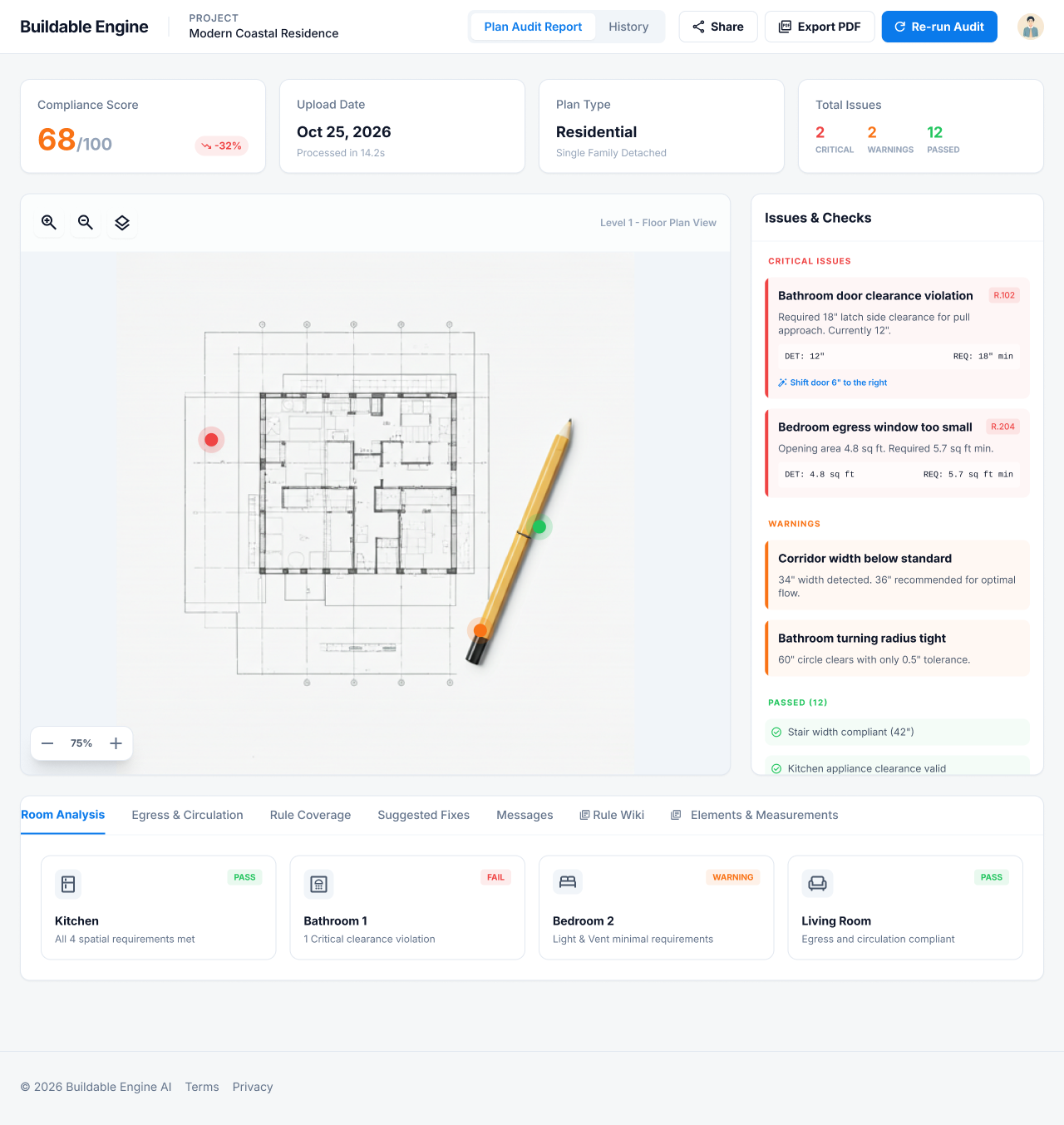
The construction industry has always had a name for what goes wrong between design and reality — RFIs, change orders, schedule float. Now it has a name for the layer that prevents it. Buildability Intelligence™ is a new category of applied AI that evaluates whether a designed object can actually be built, before a permit is filed or a foundation is poured.

The conversation about AI in architecture keeps asking the wrong question. It's not about replacement — it's about whether AI can meet the standard of accountability that professional work in the built world actually requires.